
The Triangle: 101, 280, 880, and the Station Becoming Grand Central
101, 280, 880, one airport in the middle, and a station being built into the valley's Grand Central: the triangle that moves two million people, and the billions bet on changing it.
Silicon Valley's traffic is drawn as a triangle. U.S. 101 — the Bayshore — runs the valley's spine from San Francisco through the airport and south to Morgan Hill and Gilroy. Interstate 280 arcs west of it, the landscaped freeway through Cupertino and Los Altos that residents defend as the valley's beautiful commute. Interstate 880 cuts the east side from Oakland through Milpitas and into downtown San Jose, where the three meet in the interchanges that organize two million people's mornings.
The triangle's growth wrote its congestion. The east side filled with the valley's manufacturing and logistics; the airport — Norman Y. Mineta San Jose International, ringed by the freeways' junction — added its flows; and the southbound 101 commute to the bedroom communities of Morgan Hill and Gilroy became the region's defining evening drive. Highway 85, the west valley's later addition, relieved one diagonal and loaded another; Highway 87, the Guadalupe Parkway, threads the airport to downtown between the river and the rail lines.
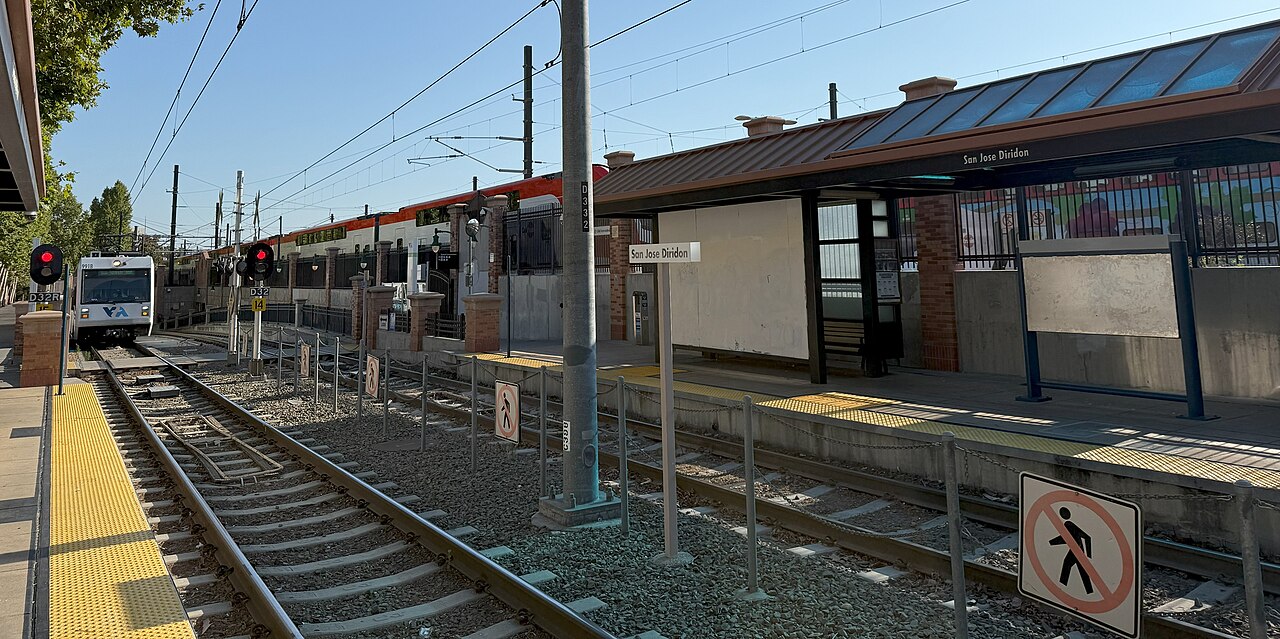
The steel alternatives thread the same map. VTA light rail — more than forty miles of it, among the larger light-rail systems in the West — runs the Tasman and downtown corridors; Caltrain's electrified service, running since September 2024, cut the San Francisco run's time and noise at Diridon Station; and the BART extension through downtown San Jose — the largest infrastructure project in the county's history — is under construction toward its Santa Clara terminus, the project on which the region's transit future is mortgaged.
Diridon Station is where it converges: Caltrain, Amtrak, the Capitol Corridor, light rail, buses, and eventually BART on one downtown site — the valley's Grand Central in assembly, around which the city's downtown plans orbit.
November's traffic adds the season: the first rain-slicked commutes on summer-oiled pavement, the holiday airport surge at SJC, and darkness at both peaks. The valley that networked the world moves itself, still, mostly by car — and spends its billions, measurably, on becoming the exception.